Attendance for Remote Teams: Tracking It Without Treating Adults Like Children
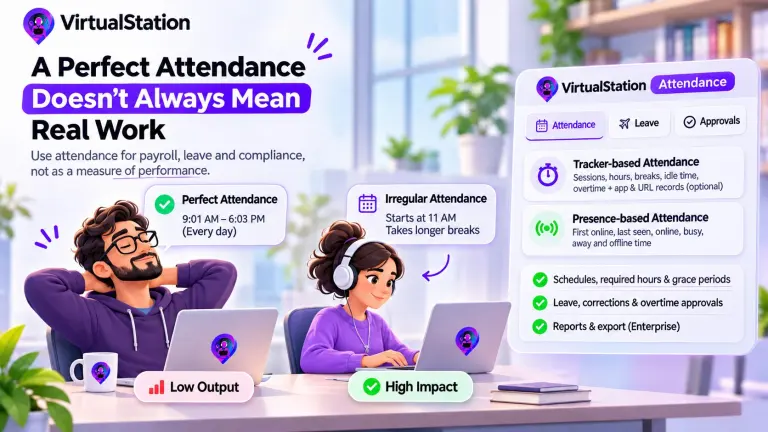
When attendance records are worth keeping, what they can never tell you about someone's work, and seven rules for running them without suspicion.
Category
Practical advice for running remote and hybrid teams: communication, focus, work-life balance and the tools that make distributed work succeed.
When attendance records are worth keeping, what they can never tell you about someone's work, and seven rules for running them without suspicion.
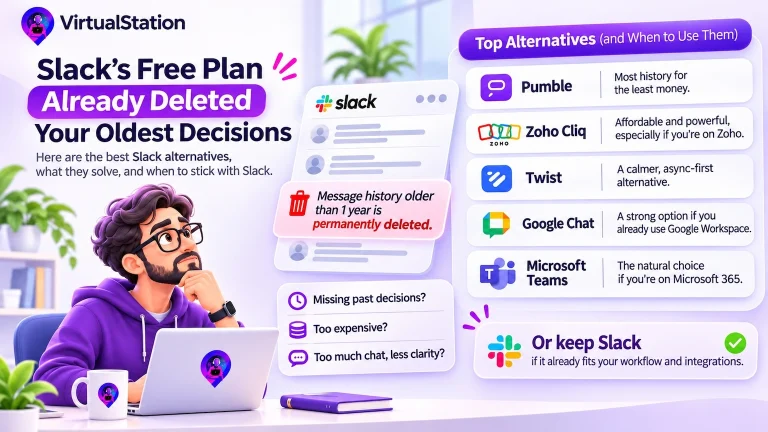
Small teams leave Slack for three different reasons, and each points to a different tool. Here is how to tell which is yours, and when to stay.
A status dot mostly tells you about a device, and people get judged by it anyway. Here is how a team can signal availability in a way that holds up.
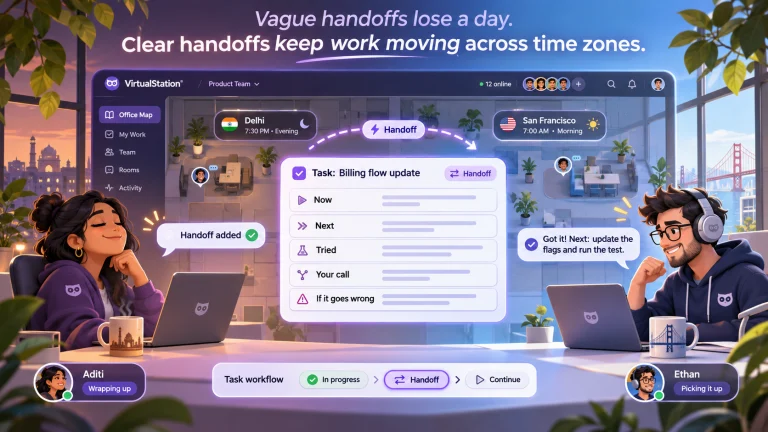
Across time zones, one small question can cost a full day. Here is a five-line handoff format and a simple ownership rule that work in any tool.
Seven Hubstaff alternatives grouped by how much monitoring they do, from no screenshots at all to tracking inside a full workspace.
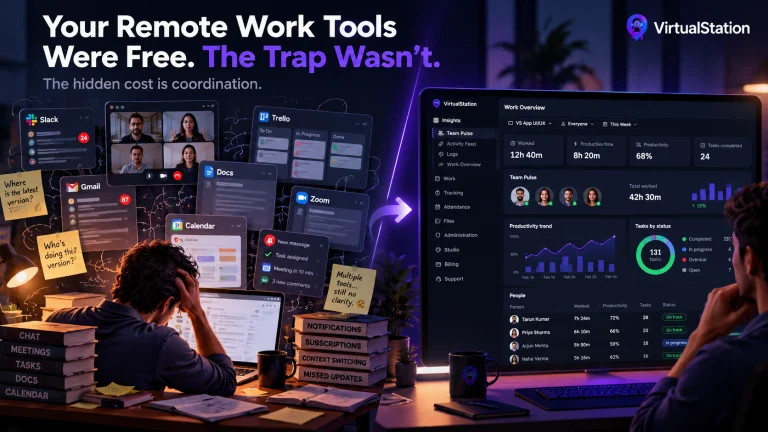
The biggest expense of remote work isn't always salaries or office space. Sometimes it's the software stack you built to save money.
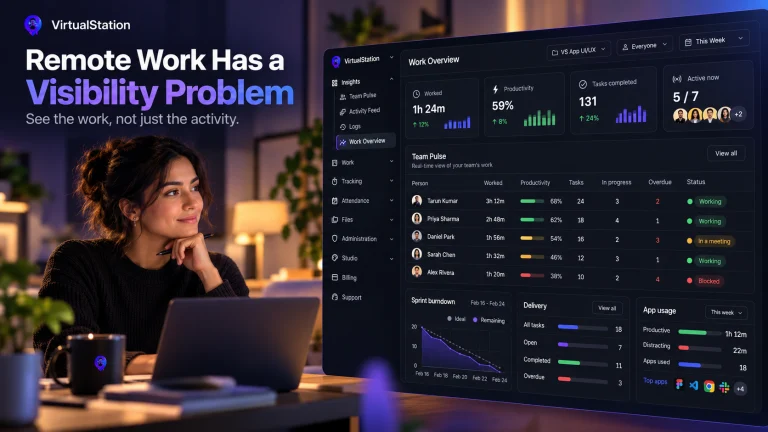
Offices gave managers visibility for free. Remote work took it away, and activity tracking hasn't replaced it. Here's what does.
Every "any update?" message points to missing information. How to see work, blockers and workload on a remote team without hovering.
Slack and Teams handle chat, but remote teams need more. Discover why a virtual workspace beats messaging-only tools for collaboration, clarity and connection.
Isolation, delayed communication and poor work-life balance hold remote teams back. See how a virtual office brings distributed teams together in one shared space.